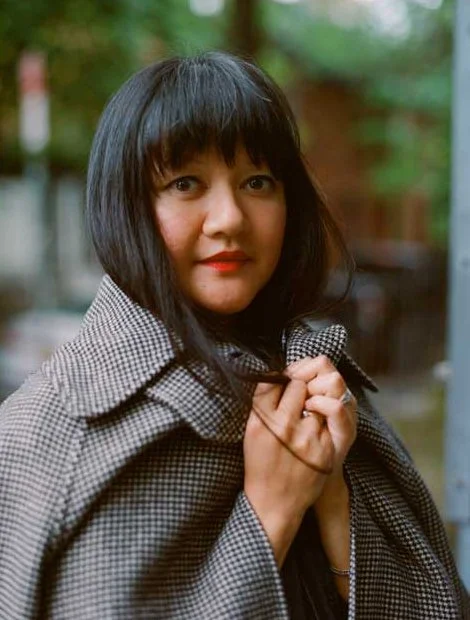
Adette C. Contreras
“Produce something without the fear or the pressure of having it be seen. There's scientific proof this does wonders for your brain.”
Adette Contreras is a serial entrepreneur, exited founder, and creative director with 20 years in brand strategy, design, and operational growth. She built Tinsel Experiential Design (bootstrapped from a kitchen table to an acquisition), scaling revenue 16x over 5 years and proving that fluency in practice. After running it for 14 years as CEO, she exited in 2024.
Through In Wild Pursuit, she partners with purpose-led founders at inflection points, helping them navigate who they are and how they show up. She is an angel investor, a fractional executive in demand, and is fielding co-founder conversations across multiple ventures.
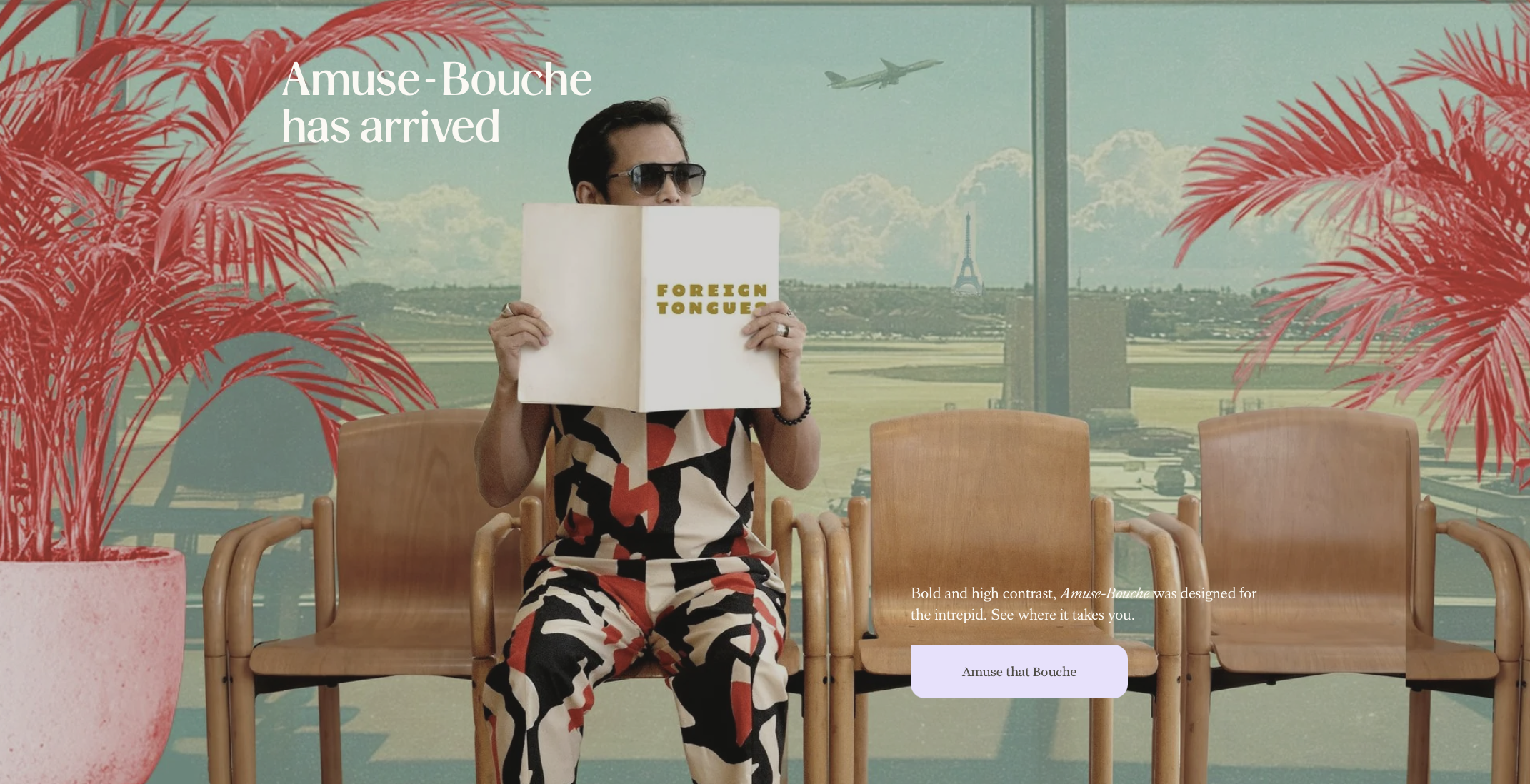
She also sits on the board of TATTER, NYC's first and only textile art museum, and founded Foreign Tongues, a brand exploring human interconnectedness through printed textiles and visible mending.
What was the inspiration for and genesis of Foreign Tongues?
My husband Måns and I went on a road trip through Spain, driving from Barcelona down to Tangier in Morocco. Clearly, this was before the children. On the way we were belting French discotheque. He looks over at me and goes, "We should start a band." I looked back at him and said, “That's the hottest thing anyone's ever asked me.”
So we decided we were going to make some French discotheque, and we were brainstorming names, and figured we'd roll it in with jumpsuits. An apparel brand and band? Hell yeah. Why not?
It got us thinking about how play and joy are not luxuries. Perhaps that's the designer in me. What you're doing has to be joyful. And that sense of play about music and disco and matching outfits got us thinking.
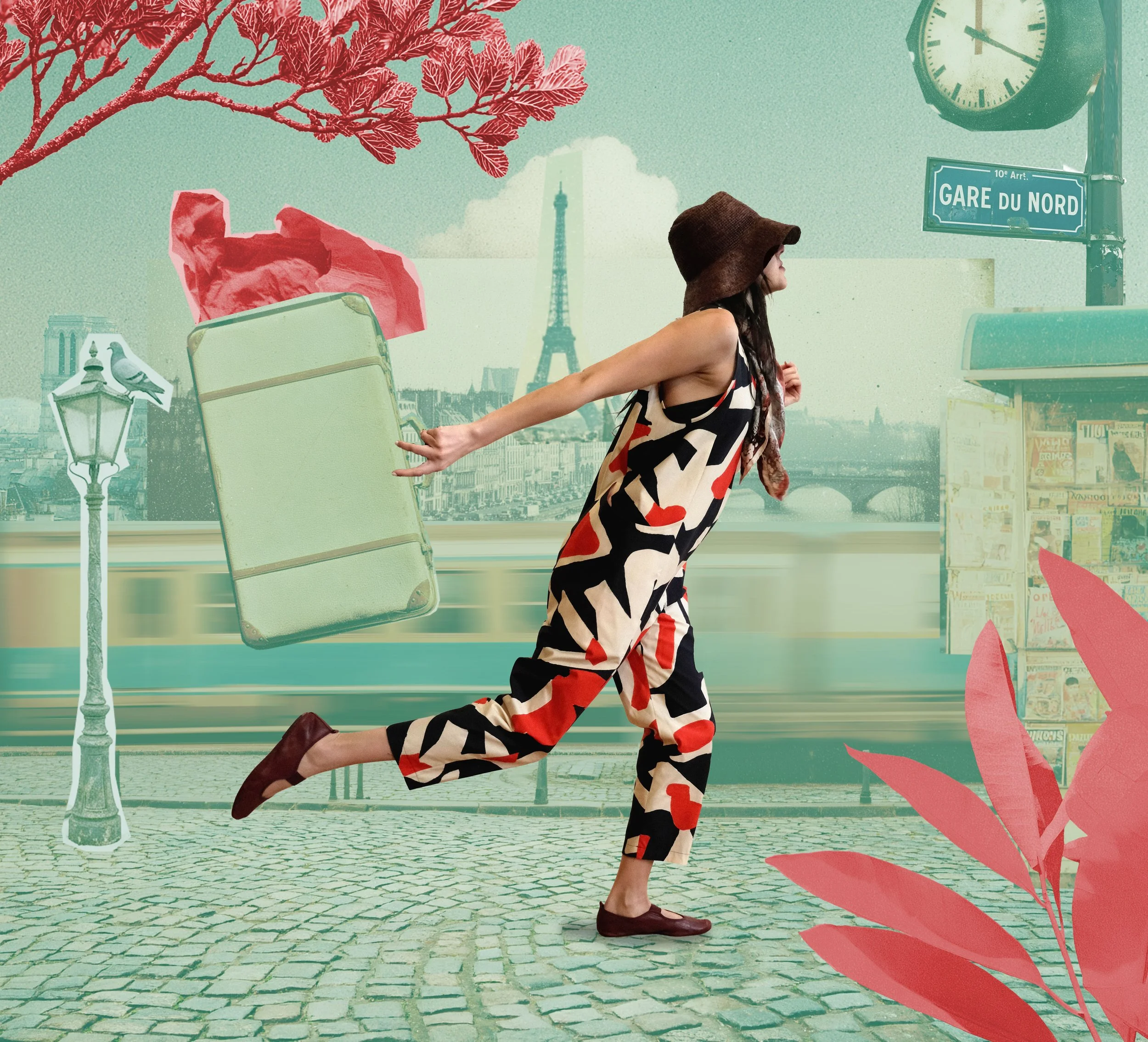
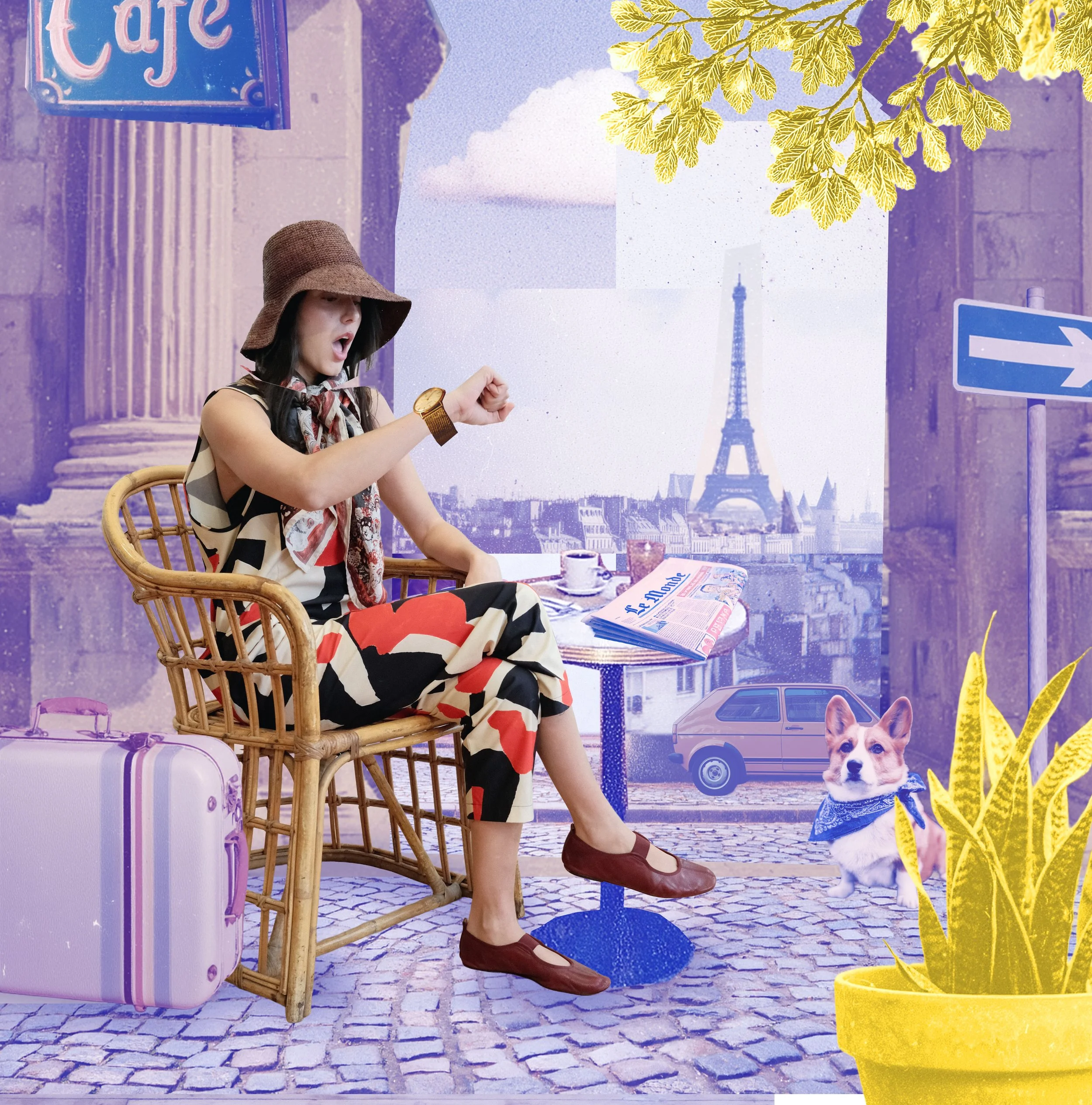
At that time, I was living in jumpsuits. It was the only thing I wore for many years. Måns and I then seriously thought, "Why don't we just make some?" And they don't have to be plain, either, right? I love peaceful neutrals, but I also love color and how colors speak with each other, how patterns play with each other. This felt like an opportunity to do something really fun.
With the printed jumpsuits, we focused specifically on–not just mending–but visible mending, because to me, the whole journey of an object is part of its beauty. How it wears, the patina of it, like how statues or landmarks get worn where people touch them. The way you wear and touch the material is so potent. There's a story there… a story of life.
He is Swedish, I'm Filipina, so we named it Foreign Tongues, and the brand really explores the interconnectedness of everything.
What advice do you give other creative entrepreneurs now?
This has been top of mind for me for the past two years during what I’m calling my “chrysalis era.”
I've been a founder for so long, and a lot of my friends are founders, so they've also expressed some deep curiosity about what their exit would be like. Life after founding. Who are you after everything you've built is gone?
The advice that I usually give is to do it for the love of the game. Don't do it for a quick buck. People think it's all prestige and glory, but it is an extraordinary amount of pressure, with far fewer freedoms than you might expect.
Strip away all of the things that you think you should do and really get honest with yourself. I recommend pen and paper, and write it all out on stickies. What is it, exactly? Is there a real need for it? Would you do it even if it takes you 5 years, 10 years, more? If the answer is “hell yes,” then do it and keep going. Your goal becomes to figure out a way to shorten the timeline as much as you can–knowing you can’t control everything.
Also, get a hobby, a real honest to goodness hobby. Something tactile and non-business-related, where you're not concerned about the output or how other people are going to receive it. Produce something without the fear or the pressure of having it be seen. There's scientific proof this does wonders for your brain. And, you know, it’s fun!
Do you find that you talk about yourself and your creative endeavors differently now than you did, say, 10 years ago?
I've been thinking a lot about it. Have you noticed that the language people use now to define themselves is ex-something? Ex-Google. Ex-Meta.
I get that it's an instant way to convey your experience with big players, and I've definitely had moments when I want to trumpet major work, but it's so interesting that the first thing people want you to see is something that's done and behind them.
So I've been thinking more about conveying the present moment. What I'm working on right now and what projects are worth my pursuit–what projects make me feel alive. I think that energy is magnetic.
Did this thinking reframe how you talk about entrepreneurship?
Yes. Founder narratives in business and the media can be glorified and very black and white, which I've learned now is not the case at all.
Instability, exhaustion, market forces, separating the personal from the professional, these things are with you the whole time as a business owner. For me, it was rocky, which can be hard to believe because we’ve grown consistently. I definitely think and talk about starting a business with much clearer eyes and weightier tones than I did a decade ago because now I know what’s really at stake, and it goes way beyond money.
Defining ourselves first as founders and entrepreneurs can be exciting and validating. But it can also feel incredibly artificial and performative. As a creative entrepreneur, after you strip away all of the distractions, there is a freedom in claiming something elemental. I am a designer, I am a writer, I am "insert art here," right?
We're lucky enough to be doing this professionally, to be able to pay our bills doing this, but then there's a very, very real human need to do something creative. Not for coin, not for approval, not for someone else's eyeballs. Just the simple act of doing is a necessary act. It's breathing air.
In the wake of my exit from Tinsel, I realized part of the reason why I felt like I had to go was that I set out what I committed to do and yet, it still felt empty. There was no more sense of play or celebration or meaning, and our values as co-founders weren’t aligned. It just felt like a grind.
Just like any founder, I found out that scaling comes with great responsibility, and I don't take that lightly. Ate is the word for big sister in Tagalog, and it’s intrinsic to who I am: the immigrant eldest daughter. This whole journey was never just about me.
Some people can detach themselves from work, but life’s too short. I need my work to have meaning, to be a labor of love, and as you know, love isn’t always clear cut.
You've always been really comfortable in the intersection of kind of touch, tactile, analysis, design thinking, and experiential. Has that gotten easier for you as you've kind of moved into this phase?
It's neither harder nor easier, but it is both simple and more complex. She speaks in riddles!
I've had the luxury of this chrysalis moment of the last two years, and I'm being really clear-eyed about what my next moves are. I discovered more facets of myself than I did, let's say, 20 years ago.
Now it feels like if I'm only pursuing one thing, it feels like a trade-off. It feels like I'm sacrificing other parts of myself, not showing up fully, or not running at full speed.
Take business and executive skills like CEOing. If I'm only building operations and setting up the infrastructure, I feel like I'm not designing enough, being creative enough, or communicating enough.
To me, design is a company's thinking made visible. It is communication, so without that, life feels more disconnected. On the flip side, if I'm only designing as a creative director, I crave complex problem-solving. My brain is under-stimulated. In that way, it has become more difficult to determine what the next step is.
I need different sandboxes to play in, which on the surface can be overwhelming. Lots of choices, myriad directions. But when I sketch out the right Venn diagram, if and when I hit that sweet spot, it feels different, like an instrument finally getting in tune.
“All these basic things blow my mind. And I am here to have my mind blown. Being in awe of something is really powerful, and there are so many little moments of this awe.”
What’s a creative thing you’ve never done before and want to do?
Weaving. I have never tried it. I love the idea of it. The mathematical side of my brain geeks out at the thought of the magic that happens in the process and in the output of textile. I want to do it from the beginning. I want to take fiber from sheep, dye it, and spin it into yarn.
There's something so beautiful about this process, so pure. I always talk about finding the beauty in the mundane. I've done it my whole life. It has kept me going, especially when times get rough.
When I moved to the U.S., I was 11, and we literally left everything I knew. Talk about grief. It was upheaval. And if you've met 11-year-old girls, they’ll tell you quickly they are experts at everything in life. Then, I also had a near-death experience when I was 17.
Coming out of that childhood, it just made me look at the world in a different way. To appreciate the ability to breathe, sleep in your own bed, turn on the faucet, and have clean water come out.
All these basic things blow my mind. And I am here to have my mind blown. Being in awe of something is really powerful, and there are so many little moments of this awe. But you really have to stop and look for it.
Open your eyes, like an artist. There are flowers everywhere. What did Matisse say? "There are always flowers for those who want to see them.”