
Evelyn Wang
“It's been very much part of the brand to talk in a more rebellious tone, a questioning tone.”
About Evelyn
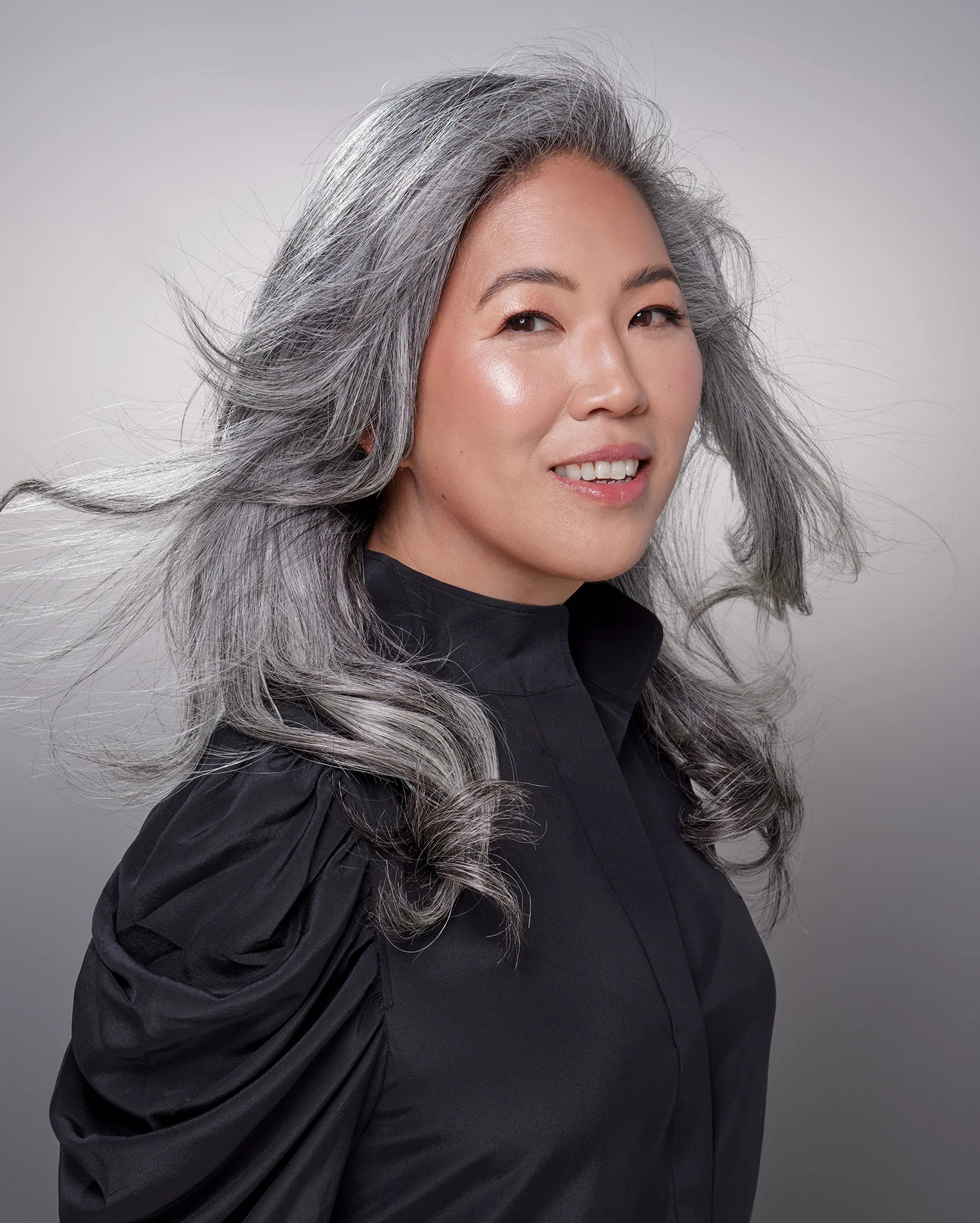
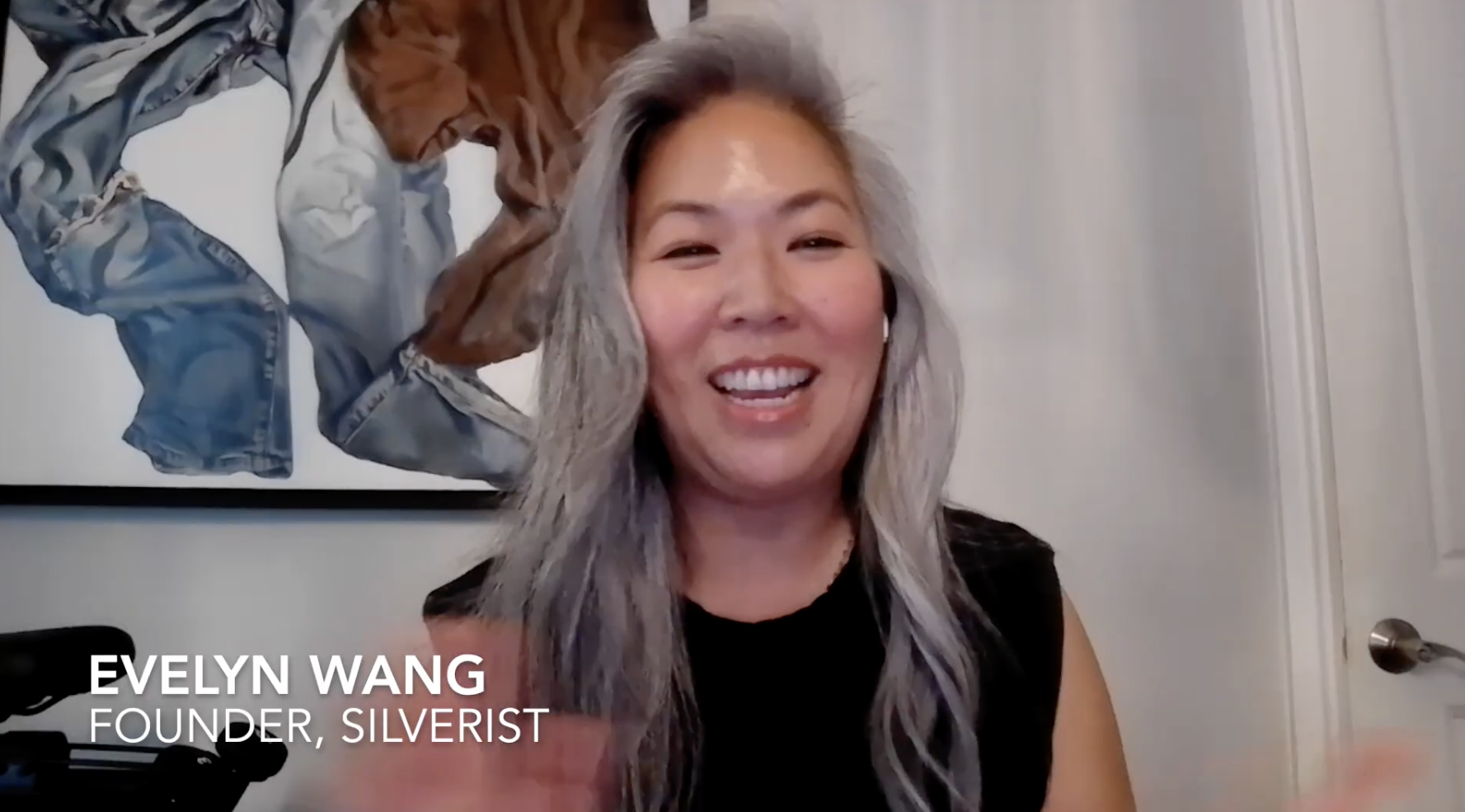
Evelyn Wang is the founder of Silverist, a clean haircare brand empowering consumers to embrace their natural silver hair.
Now known as a passionate silver hair advocate, Evelyn’s pre-silver career spans Fortune 500 giants like Estée Lauder, Johnson & Johnson, and L’Oréal, as well as leadership roles in private, founder-led companies. Formerly the CEO of Papa & Barkley, and CMO of iconic beauty brands Milani and wet n wild, Evelyn is on a path to find the riches in the niches.
How would you describe Silverist's brand voice?
The funny thing is we don't even talk about aging, because our viewpoint is that you can have silver hair at any age. It's not just something that happens in the latter part of your life. A lot of people get their first grays in their 30s.
Beauty marketing can get flattened into a more generic “over 40 mature customer profile,” and there's so much nuance that gets flattened in that approach. Our approach is to focus on the full emotional and social experience of having gray hair, regardless of your age.
Also, it's important to shift the conversation away from age because there's nothing more condescending than when people always talk to you about your age, regardless of whether you're young or old, right? "It's amazing you did that even though you're so young." "Oh wow, she looks great for her age." Sometimes there's this tribal identification with your generation that can be very fun. But it's too easy a shorthand to understand a group.
In hair care, there will always be these big, broad anchor brands. Because they're generalists, it's hard for people to see them as specialists. I think you can actually be a specialist brand and achieve a significant size due to your focus because you're given room to explore conversation in more detail.
How did you come up with the name?
The core idea of Silverist has always been about myth-busting. It's been very much part of the brand, from the conception, to talk in a more rebellious tone, a questioning tone, a tone that takes pride and sees silver hair as something that can be beautiful and shine, not as a flaw.
When you add an "ist" to something, it becomes a noun, and once I hit on Silverest as a name, I knew it was the right one immediately. It is actually a real word used more in a jewelry context, meaning somebody who works with silver. I also thought of it along the lines of "est," like the most silver.
That's a fun association for the brand, to be the person who makes silver because you are literally sprouting silver hair from your head. As soon as I trademarked the brand, I didn't really feel any doubts about it.
What was your "aha" moment when you knew you wanted to create Silverist?
I started seeing more and more women sharing their gray hair grow-out journeys. There were entire social media accounts dedicated to this one physical attribute.
Then I started to see it on the product side, changes in products that were coming out from multi-billion dollar companies. They were either relabeling products targeted to blonde hair as suitable for blonde and gray and white tones, or they were repackaging formulas that were previously for blonde hair and saying they were for gray hair. That only happens when there's a big research or sales presentation where they talked about the market size and the demographic shifts, et cetera.
I'd thought about founding a brand for a long time. I literally have the exact hair type, and I've gone through this journey, and I've worked on product development and every single aspect of the consumer journey. You know what they say about founding a brand: you should only do it when you know that the regret will overwhelm you so much that you have to do it. I have the experience and I have the hair. I can't not do it.
I remembered that in biology class you're always taught your hair and your nails are dead. So when you absorb that message, you're like, "Well, what does it really matter what I use on my hair?" Now we're learning that your hair cells might not be living, but your scalp cells are. The hair follicle is highly active and very responsive to hormones, inflammation, stress, nutrition, and water quality.
It should be so obvious, but we're just coming to understand that your hair is the output of all of these things. I wanted to be part of that conversation.
“You know what they say about founding a brand: you should only do it when you know that the regret will overwhelm you so much that you have to do it.”
Did you receive any investor or industry (or family) pushback as you were pitching the company?
For sure. A lot of experienced people I spoke to in the industry were politely lukewarm and would ask me, "Are you sure that this consumer cares about premium beauty? It's so niche. A lot of brands have tried to target an older consumer and failed. Wouldn't they want something that's less aspirational because, you know, gray hair is not aspirational?"
I guess I didn't take the expert advice. I knew that there was a community and audience for these products. Every day, my social feed was inundated with these gray-haired women who are absolutely beauty-and-product obsessed.
But you still have a moment when you take a risk and wonder if you've done the stupidest thing in the world by putting so much of myself and my own money and time into this. I'm so grateful that the reaction is as I had hoped.
You have a very welcoming TikTok presence - did being in front of the camera come naturally?
That is a very kind question because I think I'm naturally incredibly unnatural on camera, and I think back to my childhood where every single school photograph I took was terrible. My mom always said it was because I freeze up and become nervous in front of the camera.
So the idea of actually being the face gave me such anxiety. But I know founder-led brands with authenticity resonate. And I literally have natural gray hair. This was literally my journey. So, if I didn't tell this story, then what's the point? I'll do all this work to hide behind polished brand images?
I actually started the TikTok early, almost to practice. I started before I even launched the products. And now I'm pretty comfortable, it doesn't give me anxiety anymore, but that took a long time. You have yourself and you have your authenticity. And so if you can't tell your own brand story, then why are you doing this?
What's a creative thing you've never done and want to do?
I feel like this is like a declaration. I actually want to write a children's book.
I have always loved and kept a lot of different animals and I kept chickens for a long time. I also had a golden retriever who passed recently, and he loved poultry. He would stand by the incubator and wait for the eggs to hatch. He would let all the baby chicks nestle into him, and he would take care of them. It's like a children's story waiting to happen, so I'd love to do that.
Who’s a creative person who should get more attention?
I grew up in Vancouver, Canada, and one artist we were very aware of growing up there is Emily Carr. She's famous for these very rugged landscapes of the British Columbia wilderness and First Nations. Her paintings really play with tonality in a very modern way. Very expressive, with raw brush strips. I always thought she didn't have the recognition that she deserves on the global stage.
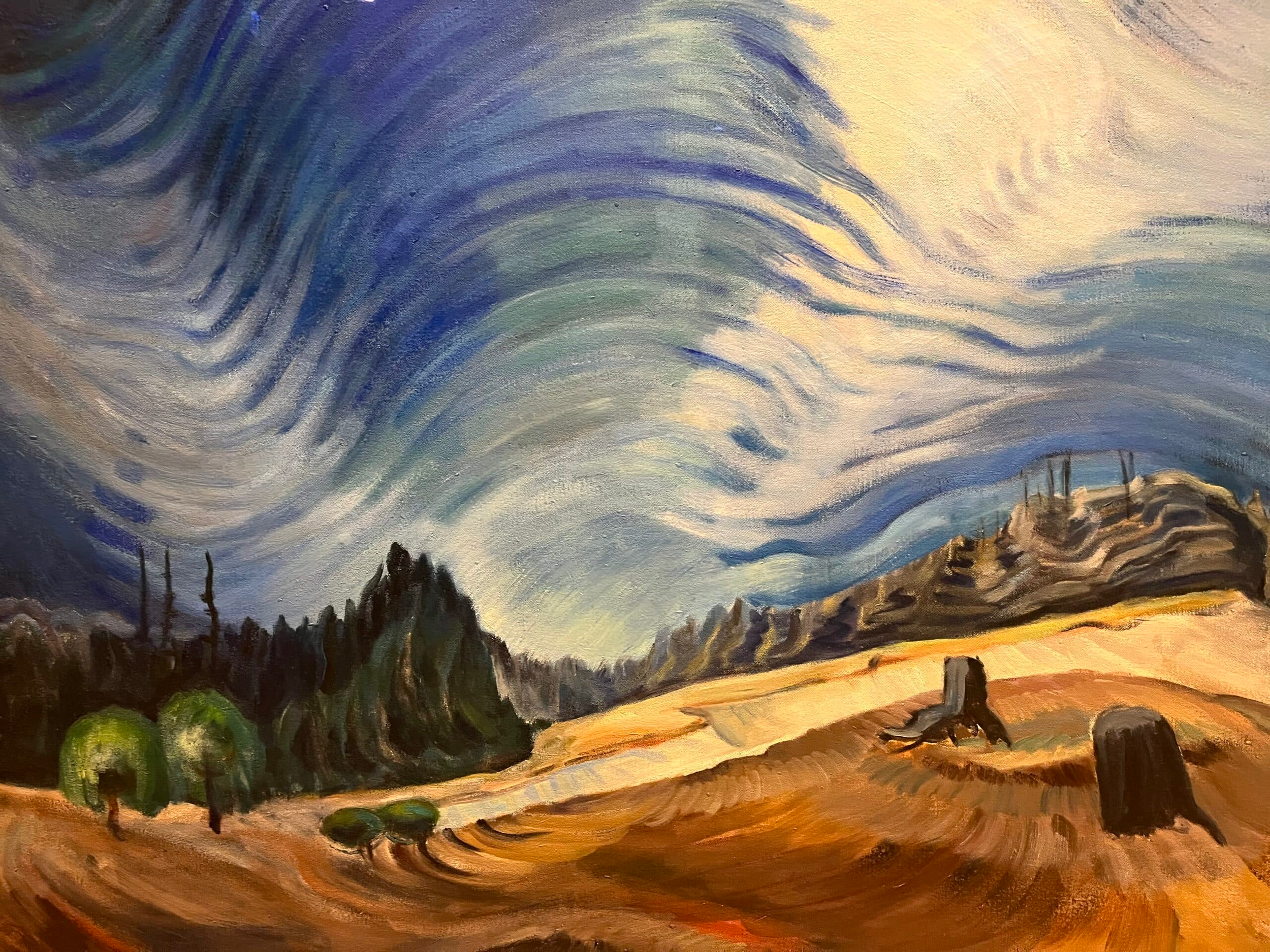
Above The Gravel Pit, 1937, Emily Carr