Truth Serum: Analicia Sotelo
“The really great poems are the ones that surprise you, where you don’t predetermine the outcome.”
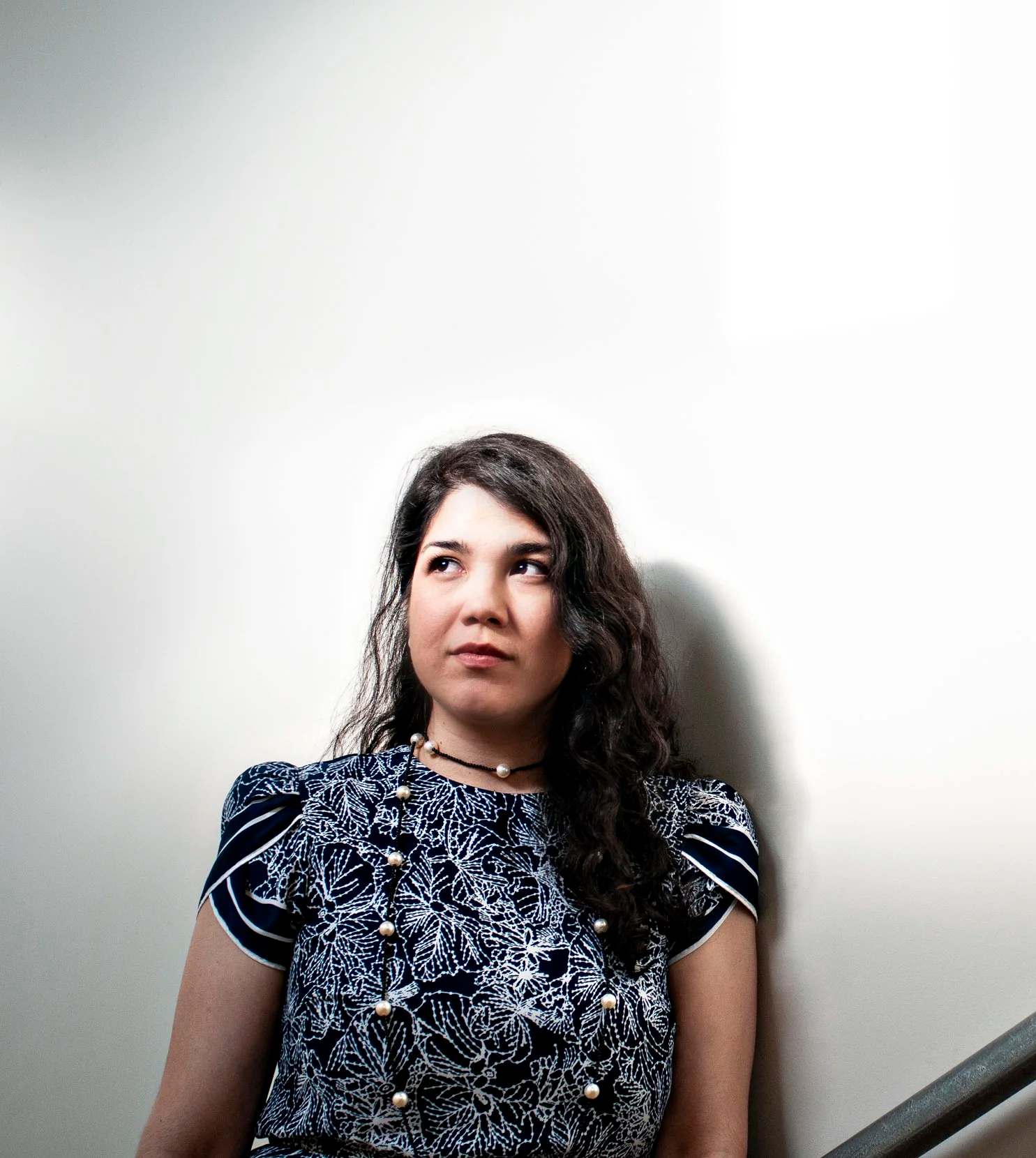
Analicia Sotelo is a Houston-based poet, writer and brand strategist. She is the author of Virgin, winner of the inaugural Jake Adam York Prize, selected by Ross Gay and published by Milkweed Editions in 2018, and the chapbook Nonstop Godhead, selected by Rigoberto González for a Poetry Society of America Chapbook Fellowship. Her work has appeared in The New Yorker, The Nation, and other publications.
Alongside her literary career, Analicia has built a career in brand strategy, copywriting and verbal identity, leading enterprise-level work across industries, and helping organizations turn complex ideas into cohesive brand stories and messaging systems. Her commercial practice spans brand positioning, voice, and verbal identity, bringing together strategy and writing for companies and creative teams.
Poetry favors a distinct voice while brand writing often asks you to disappear into someone else’s. What's it like moving between those two worlds?
For me, it’s been fairly easy to distinguish between the two because in branding it’s about telling someone else’s story, whereas with poetry, it’s a combination of telling your own story and accessing a story outside of yourself.
The really great poems are the ones that surprise you, where you don’t predetermine the outcome. With commercial writing, you know exactly what your outcome needs to be.
Poetry is really the space for my own work. If I’m working for a client, I’m there in service to them and their language. But the poetic side comes in handy when you’re trying to push a concept into new territory, somewhere a little unexpected.
Your work plays with mythology, femininity, and Mexican-American identity. Is there a subject you keep trying to leave behind that keeps finding its way back into the work? Or a subject you want to incorporate more but have trouble bringing into your work?
In terms of subject matter, I try to keep myself open to experimentation. I have a way of thinking about this that I sometimes teach when I do workshops for poets.
My theory is that the more you try to predetermine a bigger meaning out of a piece, the harder it gets. Let’s say you want to write about love or war or the intangible connection between human beings. All those grandiose topics are so abstract that you can almost lose that visceral connection with what you’re crafting as it happens if you only think about big feelings
For example, there are countless love poems that all sound the same. But it’s very unlikely that a love poem that starts as an ode to your hair products is going to sound the same as what you see on Pinterest or Instagram. That’s because specificity forces out meaning.
So I try to stick with the senses: capturing the moment, observing things with great attention, listening to the musicality of it. I never want to start by saying, “Oh, I’m going to write this great piece about X.” Instead, I’m listening in and trying to cultivate a sense of bravery around, “I don’t know what I’m going to write.”
It is challenging, though, to write about subjects I’m closer to emotionally. I might write about something, but I won’t publish it for a few years because I need that time as a human being to understand it as something outside of myself versus something that’s simply personal.
There’s a lot of desire in your writing, but also a lot of negotiation over who gets to want whom and on whose terms. Has your understanding of desire and power changed as your writing has evolved?
I was always interested in power and desire. But I think it was more reductive.
As I worked on my first book, I realized I needed to look at the in-between things, the elements of ourselves that maybe we don’t recognize until it’s written down. And daring to look at something from multiple angles instead of coming through with a very firm idea of what’s right and wrong.
It’s why the Ariadne character admits to herself that she went after Theseus as a kind of self-destructive act mixed with a self-empowering act, for example. I’m interested in how with poetry, we don’t have to have the answers, but we can reveal more than we would otherwise.
When your books reach people and start having a life beyond you, does your relationship to the poems change, and how do you parse “ownership” when it's out in the world?
The first time you publish a full-length book, it’s intimidating. Everything I thought could or would happen didn’t happen, and everything I didn’t think would happen sort of did.
There’s always going to be a strong personal side to any poems I write, but I often think about musicians when they sing the same song over and over, especially if they wrote it. How has that meaning changed for them over time?
As soon as the work is written down, it’s almost like it’s a part of me, but not part of me. A big part of wanting to become a writer was realizing that I could read someone’s poems from any time period and, if I connected with the writing, I could connect with that person and their world.
So when people come up to me and tell me their own experiences, I really like that. It might be someone super young or someone who has a very different life than me. They’re relating to something that, at first glance, seems like it’s just about femininity, but they’re relating to other aspects of it, including ones I may have never considered. That part is fun.
What’s a word you love purely for the way it sounds?
Vivacious.
What does the poetry world understand about words that the advertising world could learn from?
Specificity. So much of our language, even before the popularity of AI in branding and advertising, recycles the same abstract ideas and words.
There’s always this desire for something to be “authentic.” But what does authentic mean? Usually it means, “We’re humans just like you, and we understand you.” And then everything has the same pacing and sound, and the same words are used in slightly different patterns.
Specificity is different. If you can say specifically what you do that’s extraordinary and how that brings value to the customer, and use words other than “authentic” or “innovative,” then you’re doing something different.
That’s what poetry can lend to advertising: say something real instead of something abstract.
What can you get away with in a poem that you can’t anywhere else?
Well, in poetry you can get away with saying more things. A poem can be defined as both autobiographical and not autobiographical. It’s really difficult to tell if something is fictionalized, completely true or a blend.
You can say something in a poem that you would never say in real life. The liberating part of that, and what I try to teach others whenever I’m asked, is not writing something as if you’re going to show it to your immediate family member. Really dare to write something that society says you can’t say.
That activity is liberating because it gives you this sandbox in your brain where you can go anywhere and do anything and really figure out what your emotions are. Anywhere else, outside of art, there’s a certain veiled quality to how we speak to each other.
“When we talk about sounding more human, what we’re often really asking is, ‘Can you change our language from robotic or filled with jargon? Can you make it sound conversational?’ For a lot of businesses, especially B2B, even that is a big leap.”
Do brands spend too much time trying to sound like people?
My first instinct is actually that they don’t sound enough like people.
When we talk about sounding more human, what we’re often really asking is, “Can you change our language from robotic or filled with jargon? Can you make it sound conversational?” For a lot of businesses, especially B2B, even that is a big leap.
But then brands can also go too far and try to sound exactly like their customers. “We’re targeting Gen Z, so we need to use the language Gen Z uses.” A brand sees another brand being successful with a particular market and thinks it should do the same thing, even though that brand may be in a completely different category.
And people can see through that instinctively because that’s not actually how humans operate. People code-switch. They might have a certain way they talk to their friends, but when they’re in a grocery store talking to someone about their groceries, they’re going to sound different.
The way brands don’t sound human enough is often in how they define their brand personalities. If the character of your brand is “human, caring, and innovative,” almost every person could be defined as those things.
But if a brand is “disciplined, gutsy, and thought-provoking,” that’s a person you can start to see. Then you can build a voice that sounds like that human being because you know human beings who are like that.
Food is another recurring motif in your work. Does it come up naturally?
Yeah, it does. I’m really passionate about the way food and relationships are tied together. I have a poem about guacamole that was very intentional because it was about societal differences in what guacamole at a restaurant means. I write about barbecue quite frequently because it’s very true to Texas. I grew up with it, and there’s a certain kind of ritual to it.
What interests me is the way that, when you’re eating and sharing food with other people, a type of community unfolds naturally from that, and in different ways.
And Houston is apparently the most diverse city in the nation, with an amazing food scene. You don’t just find food from a particular country, you find food from a province within a country. You can almost live around the world very affordably just by going to one of these pockets and then going home. It’s almost like you’re always traveling.