Kate McQuillen
“The best pieces always come from the times when you take the biggest risk.”
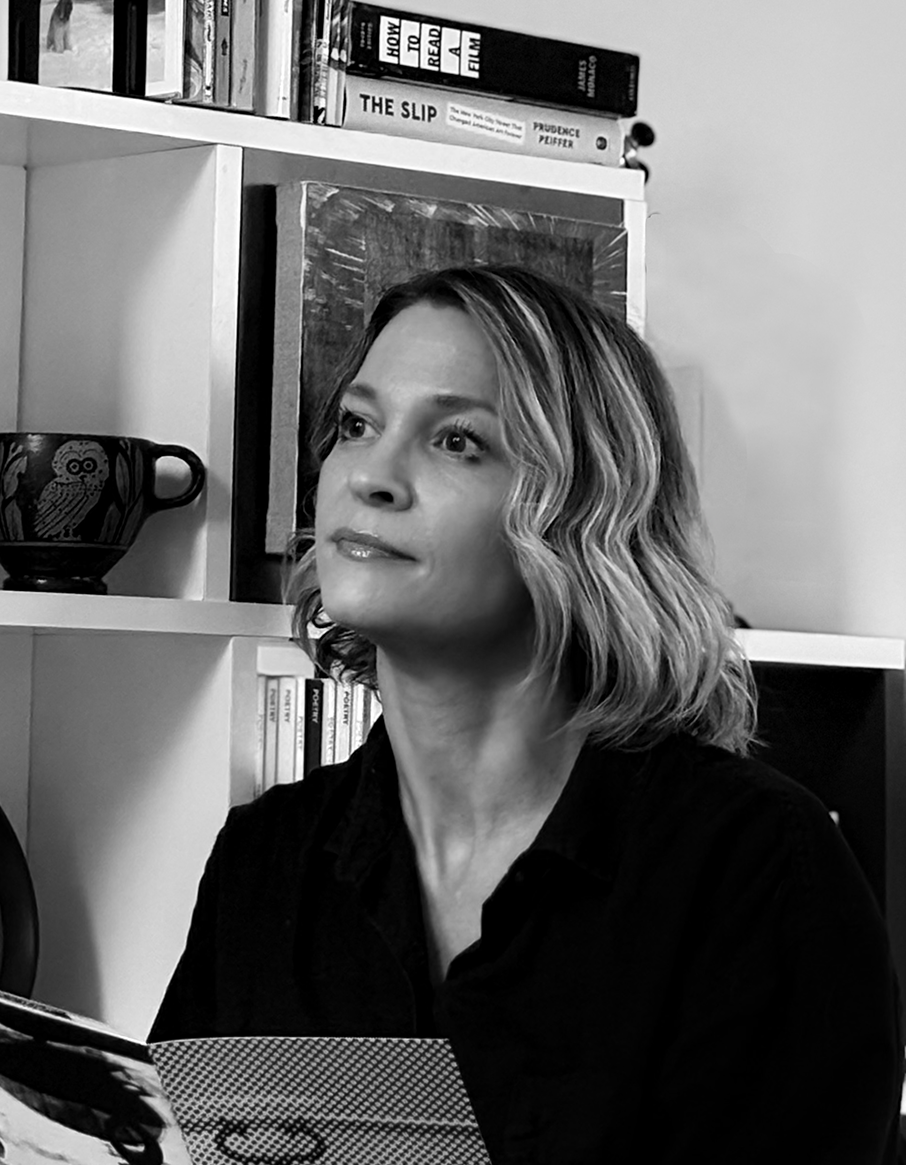
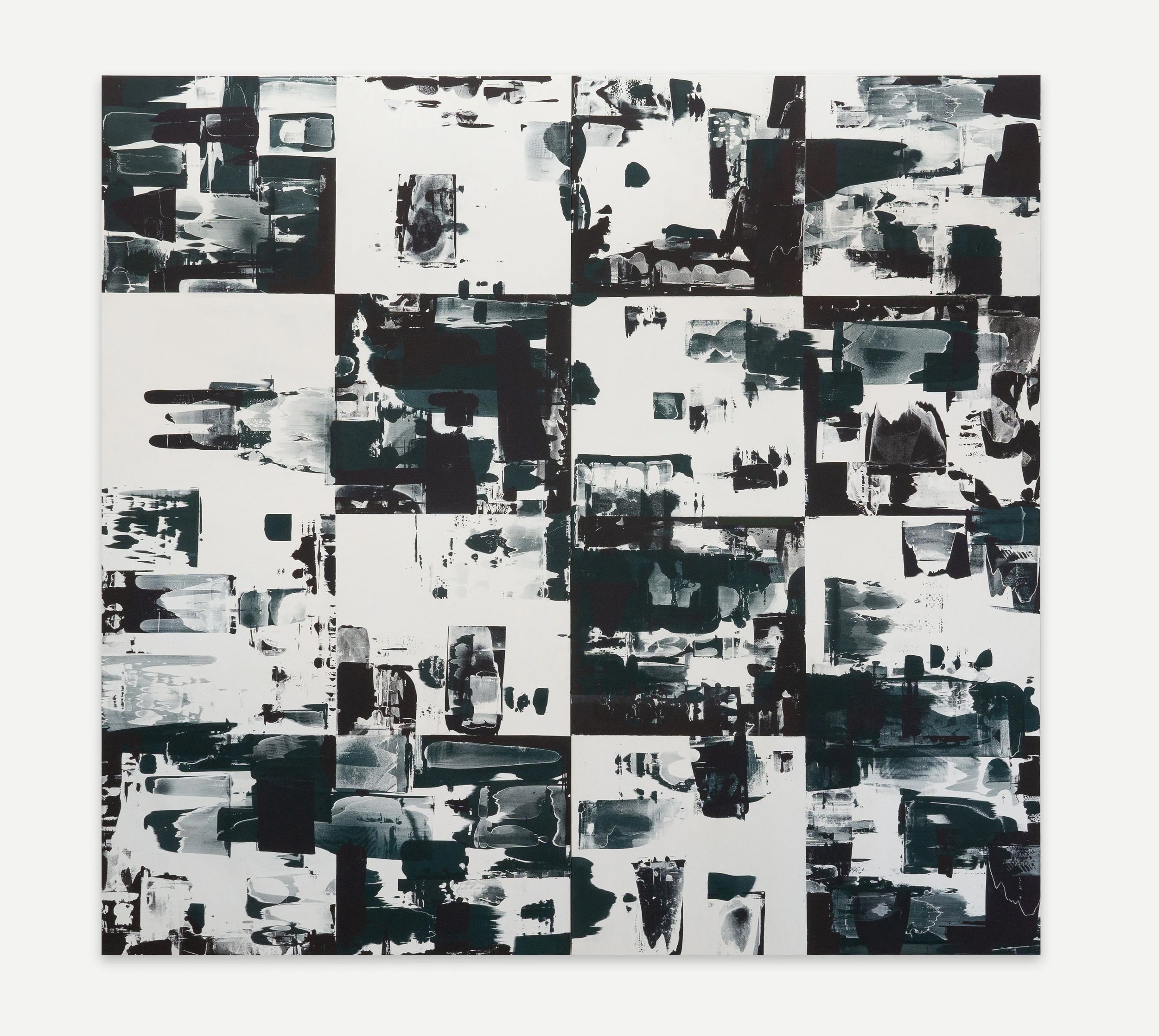
Kate McQuillen is a Brooklyn-based painter and printmaker whose work explores the space between abstraction and representation. Her paintings combine techniques drawn from screenprinting, watercolor, and acrylic. They use layered color, lifted and erased marks, and gestural forms to create a contemporary visual language that evokes feelings of rhythm, movement, accumulation, and erasure.
Her work has been exhibited at The Armory Show, NADA New York, and galleries and institutions internationally, and is held in numerous public and private collections. McQuillen was a founding member of Super Dutchess, an artist-run project space in New York City, and she is currently running a project called Meet Me at the Met, which is a series of self-run small group tours of the Greek and Roman galleries at the Metropolitan Museum of Art.
Her third solo exhibition at the Massey Klein Gallery, Echo Resounds, runs until October 24, 2026.
What inspired Meet Me at the Met?
Friends would come into town, and I would always offer, “Do you want to see my top five favorite vases?” And people really responded to it! As I started developing a new body of work, my subjects became more aligned with themes from antiquity, so the idea naturally started expanding.
There was also an actual event that inspired me too. I went to a show by a contemporary New York artist named Claudia Bitrán at Cristin Tierney Gallery in January. It was the culmination of a 10-year project where she had remade James Cameron’s Titanic shot for shot.
She did it on a shoestring budget and involved an enormous number of people. She essentially created a community around her art project by involving students, friends, colleagues, and family members. Everybody who knew Claudia was somehow wrapped into this pop-culture remake.
I had never seen anybody create a community that way through an art piece. It got me thinking about ways artists can spread what they’re interested in beyond an object-based practice. So I started saying, “We’re going to look at all these vases. I’ve chosen them all specifically, and the subjects we cover are nudity, rivalry, sex, drugs, rock and roll, androgyny, and the afterlife.”
That would make people laugh, and it was usually an entry point that allowed me to show them very specific works that do all those things. These artists were laughing over the same kinds of things we laugh over now. They would spar with each other over who was the best. It’s very relatable, and amazingly, these objects are still around.
Your process is technical, but you’re also creating situations you can't entirely control. How much unpredictability do you need before a painting starts coming into focus?
It does feel like a tightrope. If I don’t give myself enough material to start with, it often takes way longer or becomes a much harder struggle.
I start with a blank canvas and lay down color all over it. Then I work backwards and take things away, so I’m working reductively for the first segment of each painting.
Occasionally, I’ll start with something additive onto the white surface. That’s a newer tactic I’ve added recently. But in general I have this whole process of laying down flats of color, and I have all these ways of messing with the process that starts to generate images. Things like moiré patterns that appear depending on how I load up the screen with ink or how long I wait before I lift it. Or maybe I’ll move the squeegee around in a certain way.
A lot of those things are decisions I make in the moment. When I see what I have, I start lifting away. At that point, I probably have some idea that has started to form. It may be an idea from a previous drawing that’s been kicking around the studio, or it might be more of a concept or a phrase … an idea that came to me through something I read or watched.
Then those two states start to come together. I keep some of the chaos of the earlier phase and start applying more recognizable or logical steps.

Your work captures that in-between space of appearing and disappearing, of transformation and alteration. How did that sensibility evolve?
A lot of the recent work has been drawing from stories from antiquity that deal with transformation.
Ovid’s Metamorphoses is the subject of my next show. It’s a retelling of Greek myth from the Roman era, and he focuses on myths in which characters transform from one form into another. There are characters turning into laurel trees, underground springs, rivers, or clouds.
The nature of my work goes with that in terms of things moving in and out of space. Going back to my printmaking days, it’s all about impressions. It’s an instant where two surfaces come in contact with each other, and then there’s the remnant of that act.
Everything gets flattened down into a singular moment. I think that’s what’s happening visually when people respond to that aspect of the work. It’s almost like you’re seeing two things at once in the same space.
“One thing I really think about with titles is how they sound out loud. Vowel rhymes, alliteration, and rhythm are always things I’m thinking about when I’m titling a piece.”
Your titles (A Thief With No Loot, Slow-Talking Heroine, Radio Nurse) can feel like short stories. Does the title or the painting come first when you are ideating?
A lot of times, the titles are from works by other artists. Radio Nurse, for example, is actually an object made by Isamu Noguchi. It was this incredible early baby monitor, and it’s a stunning object. I curated a whole exhibition around the concept of it.
Slow Talking Heroine was made in response to the singing style of a musician, Shalita Dietrich, whose work I really loved. That was one I came up with myself, and I think it came after the painting. I was listening to a certain band again and again, and started to think, “Okay, this painting I’m making has to be related to this experience of this music.”
Other titles, like Dual Goddess Concept, come from phrases I encounter in my research. That was a phrase I came across while researching certain myths, and I loved the idea of it. One thing I really think about with titles is how they sound out loud. Vowel rhymes, alliteration, and rhythm are always things I’m thinking about when I’m titling a piece.
What’s the most productive mistake you’ve made in the studio? Something you initially thought had ruined the work?
It sort of feels like the best pieces always come from the times when you take the biggest risk. I don’t know if that’s just in my head, but it generally feels like the payoff is best when the potential for a mistake is greatest.
The whole basis for my process actually came from one of those moments. I had this treated panel sitting on a tabletop in the studio, and I spilled water on it. As it was drying, it looked exactly like how a lithographic stone looks partway through the printing process.
I saw it, and it became clear to me that the panel had two states. There was an open, receptive state, and then there was an area where all the water had absorbed. I thought, “If I print over that right now, it’s going to accept ink in one place and not accept it in another.” And that’s basically all you need for a printmaking process.
So that was a total accident. I just saw it, and that’s how the whole body of work started.
You’ve been on both sides of the gallery, as an artist and as someone who’s curated and run spaces. What did being a curator teach you about why some artists get attention and others don’t?
You definitely see artists who are able to navigate that really well. I think it takes a certain kind of artist to do it with a lot of grace.
When there’s a zeitgeist around a certain set of ideas, there will be artists whose work naturally rises to the surface. Whenever I’ve been in curatorial situations, of course you want to have some of that because you’re going to be part of a bigger conversation, which is what we’re all trying to do, you’re trying to create something bigger.
But I would always look for those artists who might be on the periphery and might not be making work that is totally in that zeitgeist. If you can position them alongside artists who are engaged in a conversation that’s really hot at the moment, that’s another way to expand the conversation.
The art world needs both kinds of artists: artists who are pushing something that’s maybe more predetermined and other artists who are doing something a little more in the background.
I like to think that, over time, all those artists will get a chance. There are waves that come through, and some people are just waiting for the right wave.
Artists are essentially small-business owners, and there’s an enormous amount of invisible labor behind an art career. What percentage of being a working artist is actually making art?
It’s so difficult to answer because visual art … not all forms of art, of course … is kind of free from time.
You can have an experience with an image that lasts an instant and is really impactful, or you can sit with a painting for 20 years in your apartment and it will still give you new things.
Sometimes a painting can take three years and another time a painting can take three weeks, and they can be equally good paintings. Why one is able to be condensed into a short period of time and another takes so long, I have no idea. It’s kind of a mystery. I was just talking with someone about Dolly Parton, and they were saying how she wrote “Jolene” and “I Will Always Love You” back to back. Some songs take 10 minutes and others take a year.
As for the nuts and bolts of all the paperwork and stuff, it’s hard to put a percentage on it, but it is significant. It also requires consistency. I try not to go weeks and weeks without checking in on application deadlines. You have to stay on top of it, and it’s not always the thing you want to do with your studio time. Sometimes you’ve just got to make it happen whenever you can.